
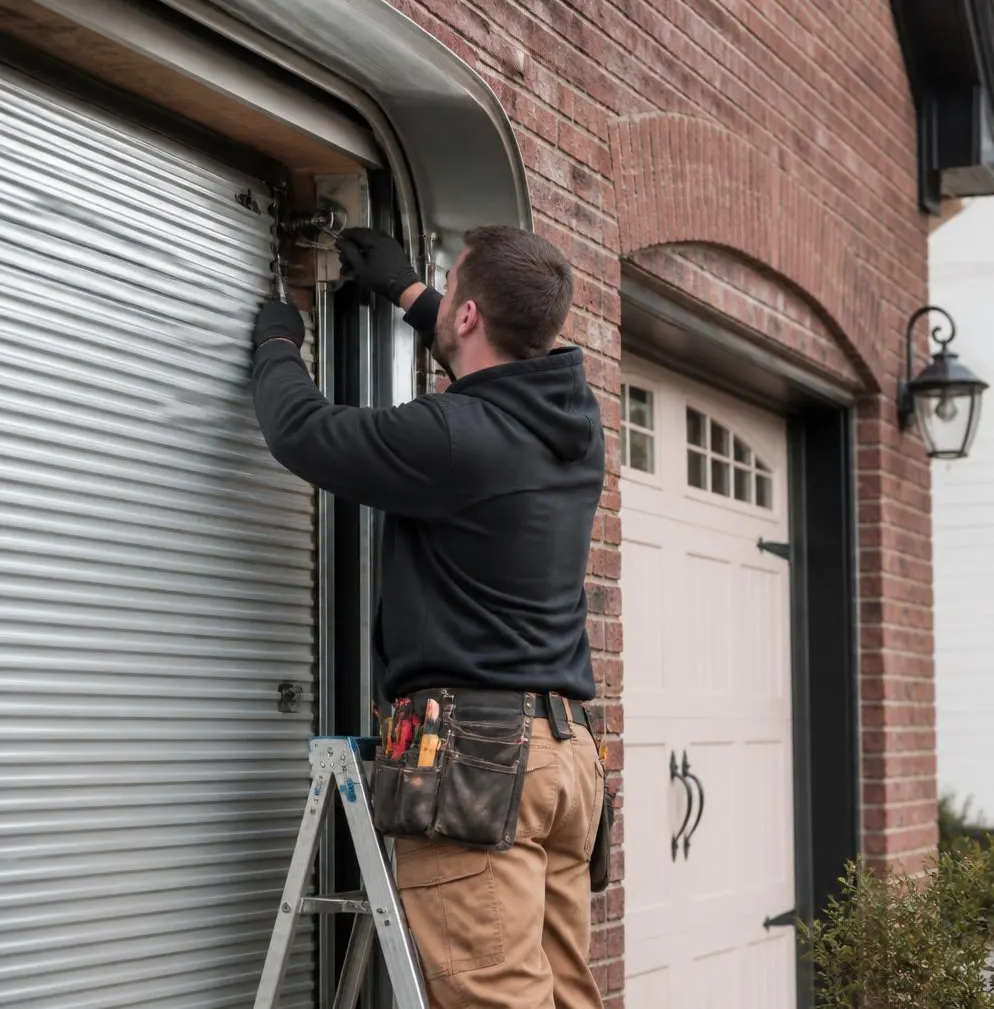
Short answer: retrofit anything that protects people from getting hurt, and leave alone anything that's purely cosmetic or still doing its job. That means photo-eye sensors and auto-reverse get fixed no matter what. The faded panel color or the slightly louder-than-it-used-to-be motor can wait.
If you and your spouse have been going back and forth over whether that old door needs a full overhaul or just a once-over, here's the actual breakdown, not the worried-about-everything version or the ignore-it-all version.
The One Thing That's Non-Negotiable
Garage doors built before 1993 often don't have photo-eye sensors at all — the little sensors near the floor that stop the door from closing on a kid, a pet, or a car bumper. If your door predates that, or the sensors have been unplugged or bypassed (common after years of false-triggering from spiderwebs or dust), this is the one repair that isn't optional. Same goes for auto-reverse: the door should bounce back up immediately if it hits resistance on the way down. If it doesn't, stop using the opener until it's fixed.
What's Genuinely Worth Retrofitting
- Springs and cables showing rust or fraying. Humidity here is hard on exposed metal, and a snapped spring under tension can do real damage. If you can see rust flaking off or strands separating on the cable, replace it before it fails on its own schedule.
- Weak or missing wind-load bracing. Older doors weren't always built with reinforced struts for high wind, and Florida's wind-load expectations for garage doors have gotten more serious since many of these doors were installed. A retrofit kit with horizontal struts is a reasonable, affordable upgrade if your door flexes visibly in a storm.
- The opener itself, if it's original. Not for the sake of having something new — but because older openers may lack both auto-reverse sensing and a rolling code for the remote, which is a basic security gap.
- Swollen or warped wood panels. Afternoon downpours and humid stretches cause wood to absorb moisture and swell, which throws off the track alignment over time. If a panel is visibly bowing, it's worth swapping before it strains the opener or the tracks.
What's Fine to Leave Alone
- A manual lock or older-style latch that still works smoothly. There's no safety reason to replace it just because it's old.
- Original hardware that isn't rusted through. Hinges, rollers, and brackets from decades ago were often built heavier than what's sold today. If they're not seized up or cracked, lubricating them is enough.
- A noisy but functional chain-drive opener. Noise alone isn't a safety issue. If it opens, closes, and reverses properly, there's no urgency to replace it just for quiet.
- Cosmetic wear — faded paint, small dents, a slightly crooked window insert. None of that affects how safely or reliably the door operates.
Why This Matters More Here Than in Drier Climates
Heat and humidity speed up everything that can go wrong with an old door: metal rusts faster, wood swells and shrinks with every wet-dry cycle, and lubricants gum up quicker than they would somewhere drier. As the fall months bring drier air after a long, wet summer, you'll likely notice panels and tracks shifting slightly as moisture leaves the wood — a good time to check alignment before winter weather settles in. It's also smart to get any wind-bracing or reinforcement sorted before storm season builds again next year rather than scrambling during an active watch.
When to Call Madison Garage Door Repair
If your door is missing photo-eye sensors, the auto-reverse doesn't trigger, or you're seeing rust on the springs or cables, call us before using the door again. We handle garage door spring repair and garage door cable repair regularly on older doors throughout the area, and we'll tell you honestly whether a part needs replacing or just adjusting — no upsell, no guesswork.
If you're in Madison, Lee, Greenville, Monticello, Perry, Live Oak, Mayo, or Cherry Lake and you're not sure which category your old door falls into, give Madison Garage Door Repair a call. We'll take a look, settle the argument, and fix only what actually needs it.