
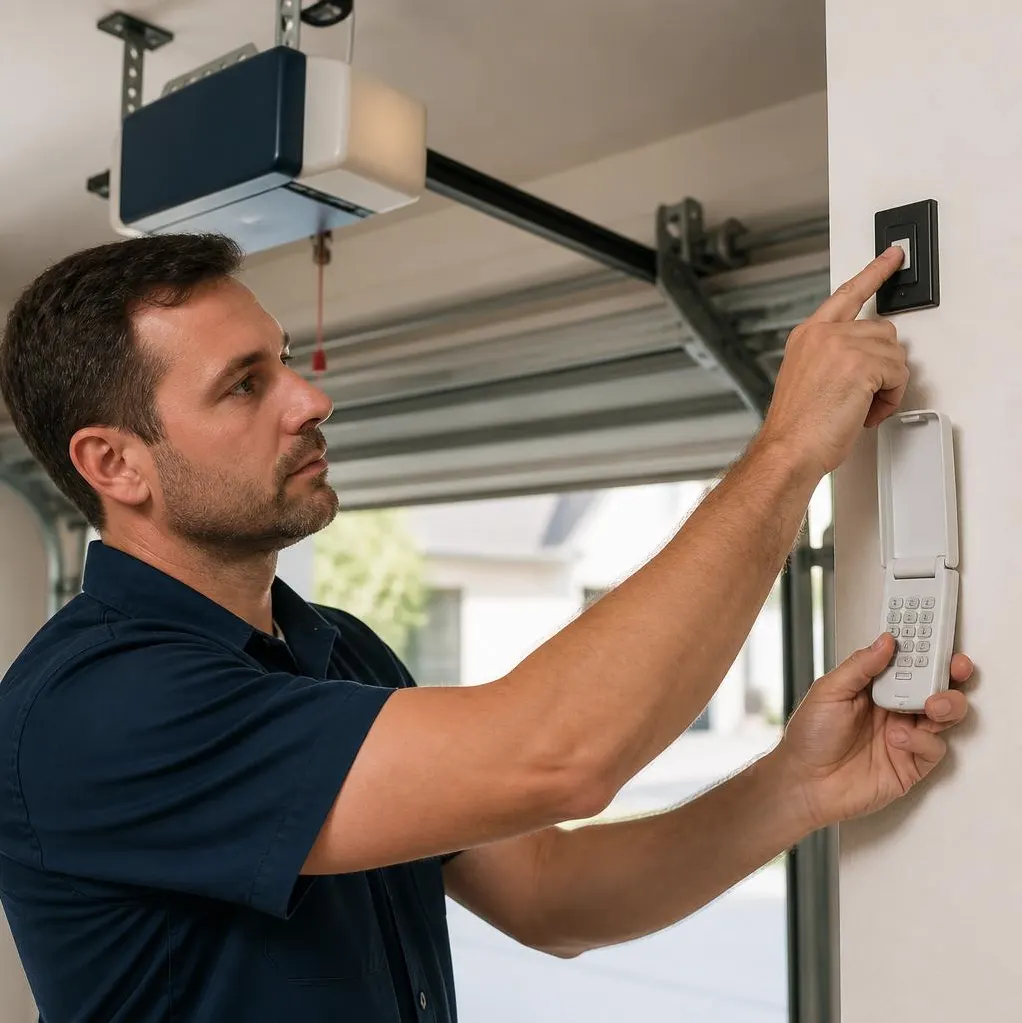
The Move That Makes It Worse
The door won't budge, so you hit the opener button again. And again. Then you yank the emergency release and try to muscle it up by hand. It's tempting because the door looks fine, nothing's visibly broken, so the assumption is that it just needs a firmer push to break free. But a door that's stuck to the slab or dragging on a swollen track isn't a strength problem. The opener motor can strip its gears trying to force a door that's physically bonded to the ground. A cable already under extra tension from a stiff, cold-contracted spring can snap if you yank the release and let the door drop or jerk. The fix almost always costs less than the damage caused by forcing it.
What You're Actually Seeing
In this part of Florida, a true deep freeze is rare, but a cold snap overnight combined with heavy humidity is common enough every winter to cause real trouble. The symptoms show up a few different ways:
- The door looks sealed shut at the bottom, like it's glued to the concrete
- The opener runs, the door shudders, and nothing moves, or it moves an inch and reverses
- The door opens but crawls slower than normal, with a strained motor sound
- One side lags behind the other, so the door rises unevenly
- Remote works fine but the wall button seems weak, or vice versa
Each of these points to a different cause, and a technician checks them in a specific order because the simplest, cheapest explanation is usually ruled out first.
1. The Weatherseal Froze to the Slab
This is the single most common cause and the first thing worth checking yourself before anything else. Vinyl weatherstripping along the bottom of the door picks up condensation from Madison's humid nights. When temperatures drop into the 30s, that moisture can form a thin ice bond between the seal and the concrete. From inside the garage it looks like the door is fused to the ground.
The fix: don't pull on the door. Pour warm (not boiling) water along the seal line, or use a hair dryer on low heat, then try the opener again once the ice has let go. If this happens repeatedly through winter, a cracked or overly soft seal is holding more moisture than it should, and replacing it solves the problem at the source.
2. Swollen Track or Panel Rubbing
If the seal wasn't the issue, the next check is the track alignment and the panels themselves. Humidity swings common here cause wood-composite panels and even some steel panel foam cores to swell slightly. On a cold morning, a panel that swelled during a humid stretch can bind against the track, especially near the bottom section where moisture collects most.
A technician checks for rub marks on the inside edge of the track, light scraping or paint transfer that shows where the panel is catching. The fix depends on severity: a track adjustment and realignment if the gap is just off, or a panel replacement if the swelling has warped the section enough that it won't sit flush anymore.
3. Springs Stiffened by the Cold
Torsion and extension springs are steel, and steel contracts slightly in cold weather. That small contraction changes the spring's effective tension just enough that a door balanced perfectly in October can feel heavy or sluggish on a 35-degree morning. This is more noticeable on older springs that are already near the end of their lifespan, since they have less margin to compensate.
Here's where the lubricant question also comes in. If the spring coils were lubricated with a thick or old grease rather than a light silicone-based garage door lubricant, that grease can gum up and resist movement in the cold, adding drag on top of the tension change. A technician will check spring tension by hand (door disconnected from the opener) and look at coil spacing and lubricant condition. A proper spring repair re-tensions or replaces worn springs; a basic tune-up re-lubricates with the right product for the season.
4. Opener Gear Lubricant and Chain or Belt Tension
If the door moves on manual operation but the opener struggles, the issue usually sits inside the unit. Older openers use a thicker gear grease that stiffens in cold temperatures, making the motor work harder and sometimes trip the force sensor, which reads as the door reversing or stalling. A technician checks the opener's force settings, inspects the drive gear for wear, and re-lubricates with a cold-weather-rated grease if needed. On belt-drive openers, cold can also cause a worn belt to feel loose and skip slightly; tightening or replacing it is a quick fix.
5. Rollers and Hinges Seized by Rust
Last on the checklist, but common in this region because of the salt air that reaches even inland areas and the general moisture exposure garage doors deal with here. Rust on roller shafts or hinge pins can tighten its grip overnight as metal contracts in the cold, turning a slightly stiff roller into one that won't turn at all. A technician checks each roller by hand for play and listens for grinding. Rusted rollers get replaced rather than lubricated, since lubricant on a pitted roller just delays the next failure.
When to Call Madison Garage Door Repair
If warm water on the seal doesn't free the door, or if it frees up but still crawls, drags on one side, or makes a new grinding sound, that's the point to stop troubleshooting and call. We check the weatherseal, track alignment, spring tension, and opener settings in that order, the same way outlined here, and we carry replacement rollers, cables, and springs on the truck for same-visit fixes. Our Garage Door Tune-Up & Maintenance service is built for exactly this seasonal stiffness, catching swollen panels, worn rollers, and thickened lubricant before a cold morning turns into a stuck door. If a cable looks frayed or a panel is visibly rubbing, our Cable Repair and Panel Replacement services handle those directly.
If your garage door in Madison, FL is sticking, sluggish, or straining on cold mornings, call Madison Garage Door Repair for a straightforward diagnosis and a fix that lasts through the rest of winter.