
If your garage lets in drafts, dust, bugs, or water during Madison's afternoon downpours, the culprit is almost always a worn-out bottom seal or dried-out weatherstripping — a part that costs very little and that most homeowners can replace themselves in under an hour.
This is one of the few garage door jobs that genuinely belongs on a DIY list. The seal is held in place by friction or a retainer track, not by springs or cables, so there's no stored tension to worry about. But in this climate, it's also a part that wears out faster than most people expect. Heat and humidity dry out vinyl, afternoon storms push water underneath the door, and the gap left by a flattened or torn seal is an open invitation for palmetto bugs, lizards, and dust to get inside.
Why This Matters More Here
Garage doors in this part of Florida take a beating from conditions that don't show up as much farther north. Humidity swells wood trim and door panels, which can push a seal out of its track or crack it where it bends. Salt-tinged air near the coast speeds up rust on the metal retainer strip that holds the bottom seal in place. And when a summer storm rolls through fast, as they do here, a worn seal means water runs straight under the door and across the garage floor instead of stopping at the threshold.
Tools You'll Need
- Tape measure
- Utility knife or sharp scissors
- Flathead screwdriver or small pry bar
- Replacement bottom seal (bulb-type or T-style, matched to your track) and side/top weatherstripping if needed
- Wire brush or stiff scrub brush
- Work gloves
- Silicone-based lubricant (not WD-40) for the track afterward
Step-by-Step: Replacing the Bottom Seal
- Identify your seal type. Most doors use either a bulb-shaped vinyl seal that slides into a T-slot retainer, or a bead-style seal that snaps into a track along the bottom of the panel. Check which one you have before buying a replacement — they aren't interchangeable.
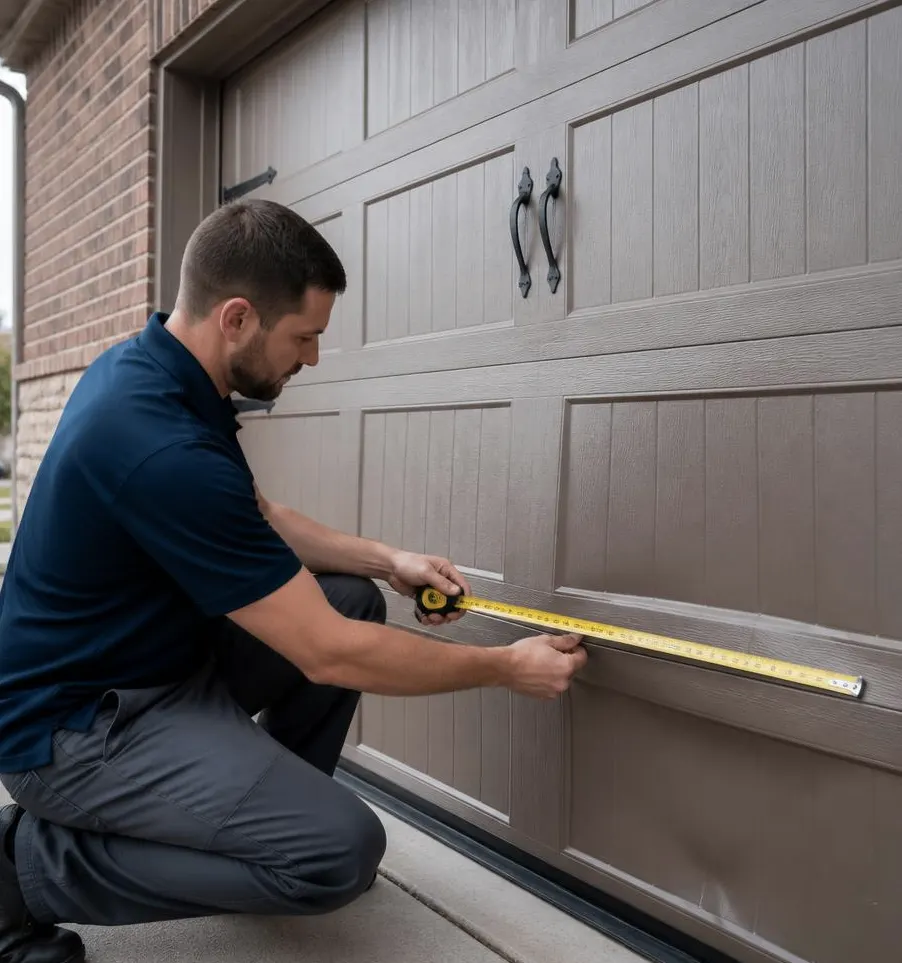
- Measure the door width. Buy a seal a few inches longer than the door; you'll trim it to fit.
- Close the door fully so you can work along its entire width without it moving.
- Remove the old seal. Pull it straight out of the track by hand, working from one end. If it's brittle or stuck, use a flathead screwdriver to loosen it gently rather than forcing it, which can crack the retainer.
- Clean the track and the floor-facing edge of the door. Scrub off dirt, old caulk, and surface rust with the wire brush. Rust buildup here is common given the humidity, and it will keep a new seal from seating evenly.
- Cut the new seal to length with a utility knife, leaving a small amount of extra material on each end.
- Feed the new seal into the track starting at one end and working across. Bulb seals usually slide in easiest when lightly dampened with soapy water.
- Close the door and check contact along the full width. Look for daylight underneath and feel for any spots where the seal doesn't touch the floor evenly.
- Trim the ends flush and wipe down the track with a dry cloth. Add a light coat of silicone lubricant to the track edges so the seal moves freely with the door.
If your side and top weatherstripping (the vinyl strip nailed or screwed to the door frame) is also cracked or pulling away, the process is similar: pry out the old strip, clean the jamb, and tack or screw the new strip into place, working top to bottom on each side.
What a Homeowner Can Handle
- Replacing a worn bottom seal
- Replacing side or top weatherstripping
- Cleaning rust and debris from the seal track
What Needs a Technician
- The door won't seat flat on the floor even with a new seal — often a sign the door is warped, off track, or the panel has swollen from moisture
- The metal retainer track is bent, rusted through, or missing sections
- Gaps appear only on one side, which usually points to a leveling or cable issue, not the seal itself
- You notice the door sagging, binding, or scraping as it moves
When to Call Madison Garage Door Repair
If a fresh seal still doesn't close the gap, the problem usually isn't the weatherstripping — it's the door itself. We handle Off Track Door Repair when a panel has shifted or won't sit flush, and Garage Door Panel Replacement when humidity swelling or storm damage has warped a section beyond repair. A quick tune-up can also catch alignment issues before they wear out a brand-new seal in a few months.
If your garage door in Madison, FL is still letting in water, bugs, or drafts after a seal swap, give Madison Garage Door Repair a call — we'll find out what's really keeping your door from closing tight.